Tuesday, November 11, 2014

Phrases in Tok Pisin

Useful phrases in Tok Pisin

A collection of useful phrases in Tok Pisin, an English-based Croele language spoken in Papua New Guinea.
You can see them in many other languages by clicking on the English versions.
Key to abbreviations: frm = formal, inf = informal
English Tok Pisin
Welcome Welkam
Hello Gude / Hi / Hai
How are you?
Fine.
Yu stap gut?
Mi stap gut
Long time no see
What's your name?
My name is ...
Husat nem bilong yu?
Nem bilong mi emi ...


Pleased to meet you Gutpela long bungim yu
Good morning Moning / Moning tru / Moning nau
Good afternoon Apinum
Good evening Apinum / Gut nait
Good night Gut nait
Goodbye Gutbai / Lukim yu bihain (inf)


Bon appetit Hamamas!

I understand Mi save tok bilong yu
I don't understand Mi no harim tok bilong yu
I don't know Mi no save


Do you speak English? Yu save long tok inglis, a?
Toktok long tok inglis?
Do you speak Tok Pisin?
Yes, a little
Yu save long Tok Pisin?
Toktok long tok pisin?
Ya, liklik
How do you say ... in Tok Pisin?
Excuse me Skius
How much is this? Hamas long dispela? Em hao mas?
Sorry Mi sori (tumas)
Please Plis
Thank you
Response
Tenkiu / Tenkiu tru / Tenkiu tumas
Nogat samting
Where's the toilet? Smolhaus i stap we?


I love you Mi lavim yu
Get well soon
Go away! Larim mi!
Leave me alone! Larim mi!
Help!
Fire!
Stop!
Help!
Paia!
Holim!
Call the police!
Merry Christmas
and Happy New Year
Bikpela hamamas blong dispela Krismas go long yu / Meri Krismas
Hepi Nu Yia
Happy Easter Hepi ista
Happy Birthday Hepi berthde  http://www.omniglot.com/language/phrases/tokpisin.php


Thursday, April 3, 2014


We Speak MSL!

A Glossary of the Language of Milwaukee School of Languages
4N6: An abbreviation for MSL’s champion Forensics team.

6-12: The answer to whether MSL is a middle school or a high school.  It’s both!
The 160s: MSL’s West Wing where most high school Science and Math classes are taught, along with several Special Education classrooms.

The 180s: The home of MSL’s English department along with high school Civics and upper level math classes. The 180s refers to classroom room numbers 180, 181, 182, 183, 184, and 185.
The AP Field Trip: A June field trip to Chicago or Madison for MSL’s Advanced Placement students.

APP: An abbreviation for Advanced Placement Psychology.  Class motto: “APP: Your App for Life.”
A.P.U.S.: An abbreviation for Advanced Placement United States History.  Also referred to as “APUSH” pronounced “A-PUSH.”

“Ask Thao”: When no one else can figure out the answer to a problem, students turn to high school Science and Math teacher Thao Zheng.
Brain Test: In AP Psych, students study for weeks to be able to identify as many parts of the brain as possible.  The current record is 327 facts.

Bunzel’s: Refers to Bunzel’s Meat Market across the street from MSL where staff like to pick up lunch or snacks and where students stop after school.
C. Harris versus G. Harris: Before their retirements, students and staff alike clarified whether they were referring to Carol Harris, 7th grade English teacher, or Gabi Harris, middle school German/Math teacher.

Coach: The name of every single coach at Milwaukee School of Languages.
Completion Ceremony: The eighth grade graduation ceremony performed the same day as the high school graduation ceremony. Also called the ‘eighth grade graduation ceremony.’’

The Courtyard: The grassy area in the center of the school where students yearn to eat their lunches.
“Do you have change?”: Contrary to popular belief, neither the ladies in the office nor teachers can break your ten dollar bill.

Eggert: The organizational powerhouse and information gatekeeper at MSL, head secretary Mrs. Eggert keeps everyone on track.  (Not to be confused with Ms. Eggert, MSL alum and current teacher of middle school Spanish.)
Evo: A teacher of Chemistry and Physics known for his experiments involving bowling balls and the MSL rooftop, Mr. Everson is an MSL icon.  The word “Evo” also extends to the computer lab and area immediately surrounding Room 166, as in the popular expression “I’m going to Evo.”

The Exchange Students: MSL’s high school hosts 9-12 foreign exchange students a year providing cultural exchanges and international friendships. 
Fad Rad: Refers to Ms. Fadness, AP Psychology and 7th grade Social Studies teacher as well as Class of 2014 and 2018 Advisor, known for her rad-ness.

Festival: Refers to Festival of Nations, MSL’s annual spring Open House to celebrate the cultures of the world and showcase the many talents of students.  ‘Festival’ must be experienced instead of described.  Abbreviated to “FoN” in staff email communication.
Frenchies:  Students of French.  Usually these students have known each other since four-year-old kindergarten when they attended the Milwaukee French Immersion School.

Fulls: Any student enrolled in a full-immersion language program.  Fulls have studied Spanish, German, or French since elementary school.
The Germans: Full-immersion students of German.

“Getting mixed up”: A code-switching experience that occurs when a student’s brain becomes so ingrained in his or her second or third language that the student starts to mix words in speech, think in their second language, and even dream in it.
Golden Bolden: An enthusiastic Geometry teacher known for her bestowal of nicknames on both staff and students, as well as being willing to stay extra late to help students after school.  

 “Going to [teacher’s last name]”: An expression meaning that you’re going to the teacher’s classroom, with the possessive “s” and classroom omitted.  The teacher may or may not be physically in the classroom at the moment, but his or her presence is felt there at all times.  Example:  “I’m going to Ackermann” or “I’m going to Knopp.”
“Half sheet of paper”: Mr. Hegelmeyer says this phrase right before a reading quiz.  The students who read the night before rejoice while the ones who haven’t cringe.

“Hanten-Sensei": Anglicism for the Japanese word "先生" (teacher), referring to Japanese teacher Ms. Hanten.
Hart’s Trip (to Spain): Refers to Mr. Hart’s biennial 17 day study abroad trip to Barcelona. 

“Hawk House!”:  The chant of the crowd at home basketball games.
Hegel: Once described as a “wolverine on speed,” this legendary teacher of Spanish, AP World History, and AP U.S. History is known for his energy and passion for teaching.

Hegeldollars: The term Mr. Hegelmeyer invokes whenever he uses an example relating to currency.
Holiday Buffet: The day before Winter Break when staff spend their prep or lunch hour locked in the library enjoying food and fellowship.

Honorary Senior: The status associated with a 9th, 10th, or 11th grader who forms close-knit friendships with a group of 12th graders.  This phenomenon is especially common because of so many students knowing each other since their early elementary school experiences.
"I had a language observation!”: A common exclamation by MSL’s Linguistics students, uttered after students have been intrigued by a comment or expression made by someone in an MSL hallway or classroom or by someone out in the ‘real world.’

“I need to go to Hodel”: A sentence that covers any reason a student has to visit guidance counselor Diane Hodel.  Visits may include schedule changes, emotional concerns, life advice, or hugs.
“I was with Hodel”: The most common explanation for why a student is late to class.

Ice Age: The German student realization that the film Ice Age and several others are actually better in German.
“Is there a Jeopardy?”: Mrs. Karabon’s English 10 classes always find themselves asking this question at the end of a unit as they hope for a review  game.

'Isabel Allende': Official name of the Middle School Spanish National Honor Society.
Kreuser: The name of this middle school Spanish/Math teacher is synonymous with championship volleyball at MSL.

Lady Hawk: Any girl who plays sports at MSL.
Loosen Field Trip: Monthly field trips organized by restless English teacher Ms. Loosen.  Loosen field trips traditionally involve a stop for lunch.

Mama Hartung: Refers to Joan Hartung, a now-retired ninth grade Algebra teacher, known for her mothering skills of both freshmen and teachers alike.
Manzano’s Sleeves:  Refers to the rumor that exists that respected Pre-Calc teacher Mr. Manzano has tattoos covering his arms, thus explaining his habit of wearing long sleeves with ties every day.  The mystery remains unsolved.

Medio punto: Among Spanish ‘fulls,’ medio punto refers to Mr. Hart’s practice of deducting 0.5 points from student work to indicate that students are close but not fully on target in their responses.
MFIS: Acronym for the Milwaukee French Immersion School.

MGIS: Acronym for the Milwaukee German Immersion School.
MSIS: Acronym for the Milwaukee Spanish Immersion School.

“Milwaukee School of Messages”: This phrase comes from the ladies in the office who sometimes joke that this is what they feel like they should say on busy days when they answer the phone.
Monitor/ Student Aide: A 12th grade student who spends their study hall hour helping out a classroom teacher with errands or grading.

Mr./Mrs./Ms.: Rarely heard at MSL, the lack of the use of these titles signals camaraderie between MSL students and staff with no connotation of disrespect.
The MSL Family: A common theme of MSL graduation ceremonies.  With most students studying at MSL for seven years, a familial bond underlies many relationships among students as well as staff members.

Mock Chicken Leg Day: A highlight of the cafeteria menu every month, the day students beg to be let out of class early so that they get a good place in the lunch line.  It is common for teachers to eat school lunch on these days.
Mr. Jones: Retired biology teacher Mr. Jones was known for asking his favorite question: “How do you spell DNA?”

(to) Oppe: To walk down the MSL hallways with speed and efficiency, oftentimes removing a hat from a student on the way. Refers to the gait and finesse of retired MSL Learning Coordinator and teacher, Cindy Oppe.
Partials: Students enrolled in MSL’s partial language immersion program.  Partials begin their study of a second language in sixth grade, instead of kindergarten.

Peck’s Store: In Room 139, Mr. Peck sells snacks and Gatorade to hungry students to help fund his annual Festival of Nations project.
Ratka: 1. Mrs.: Refers to Susan Ratka, one of the pioneers of the language immersion movement in Milwaukee and the first principal of MSL. 2. Mr.: Refers to David Ratka, who after his retirement from Milwaukee High School of the Arts, volunteered as MSL’s Technology Coordinator and currently coaches Boys’ and Girls’ Tennis.

Senior Hallway: This term represents the hallway south of the gym where the twelfth grade lockers are located and attractively adorned with names of colleges students have been accepted to. The Senior Locker area is most congested before first hour as students enter the building and race to start another day of joyful learning at MSL.
Shumweezy:  A ninth grade English teacher known for the juxtaposition of kickboxing and organic coffee, along with her ability to enjoy both while reciting Shakespeare.

Sister school: Schools in Europe that MSL partners with to share cultural experiences.  MSL is currently beginning a new partnership with Pierre de la Ramee high school in Saint Quentin, France.
SLP:  Acronym for the “Senior Language Project,” a semester-long project undertaken in twelfth grade culminating in a presentation that reflects a student’s competence in his or her second language.

Stella Yella: A competition started by Mrs. Karabon where students do their best impersonations of Marlon Brando performing the role of Stanley Kowalski in Tennessee Williams’ A Streetcar Named Desire.  STELLAAAAAAAAAAAHHHH!!!!
T.E.L.L.: Acronym for “Theatrical Exposition of Language and Literature,” MSL’s drama department.

That Room Behind the Cafeteria: Also known as room 120, this pseudo-classroom fulfills purposes such as dining, storage, conference room, and tutoring area. Most positive attribute: Stage area.  Most negative attribute: No windows.
"There’s a scholarship for that”: Ms. Hodel’s response to students’ hobbies, sneezes, last names…

Unfinished Business List: The end-of-the-semester list of students’ names and uniforms, fees, and unreturned library items that students must settle before taking final exams and/or graduating. For consequences, refer to ‘Eggert.’
Upstairs: The MSL middle school on the second floor where most sixth, seventh, and eighth grade classes are located.
“What are you exempting?”: An expression used near the time of final exams to ask another person which exam they are not taking.
The Yam:  The mascot of AP English Literature.  A new yam is purchased every year during the reading of Chinua Achebe’s Things Fall Apart.  All AP English students rub the yam for good luck immediately before the AP test, and then the yam is respectfully buried in June under the sprawling tree by the soccer field in a funeral service similar to the mule burial in Zora Neale Hurston’s Their Eyes Were Watching God.
“You be forcin’ it, bro”: An expression popular in both middle and high school when a student feels that someone else is working especially hard to make his or her point.  (Staff reaction includes the T-shirt popular on Fridays that says “Every day we’re forcin’ it” on the front and “Staff” on the back.)

List compiled in collaboration with MSL Linguistics students, MSL teachers, and MSL alumni.

Wednesday, April 2, 2014

The Language of Bonobos

Inspired by Kanzi, MSL Linguistics students took a field trip to the Milwaukee County Zoo today where Director of Conservation Education James Mills gave a whirlwind lecture that lead us through evolutionary biology, anthropology, and linguistics.  We then headed over to the Primate Building where we got to see bonobos in action--the Milwaukee Zoo is home to 20 of the 90 bonobos in captivity in the U.S.-- and then listen to a talk by the orangutan keeper about their enrichment program with iPads.  (Turns out M.J. enjoys This Old House and Tommy paints along with Bob the Painter on PBS.)


Friday, March 28, 2014

The Language of New Orleans

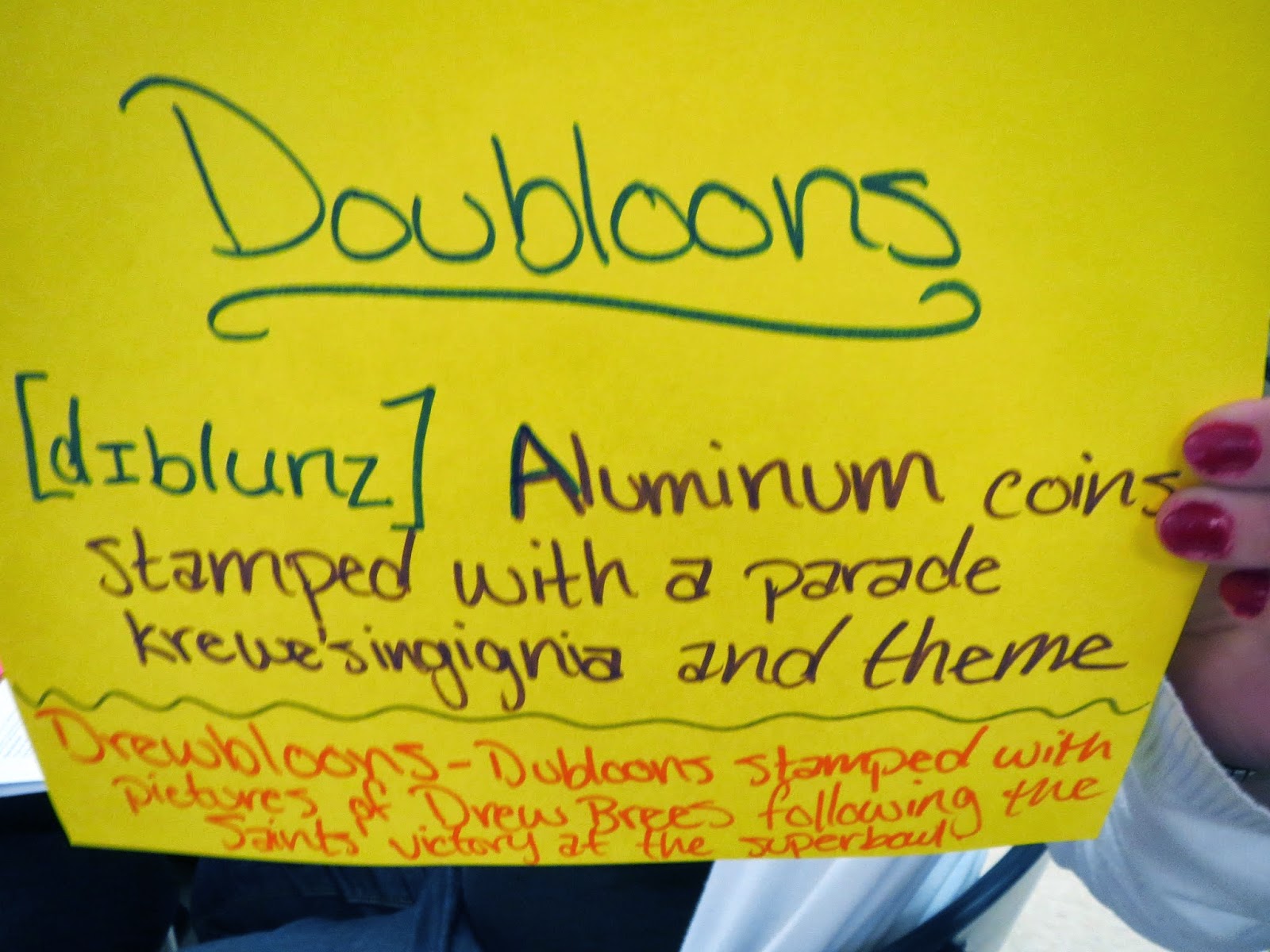
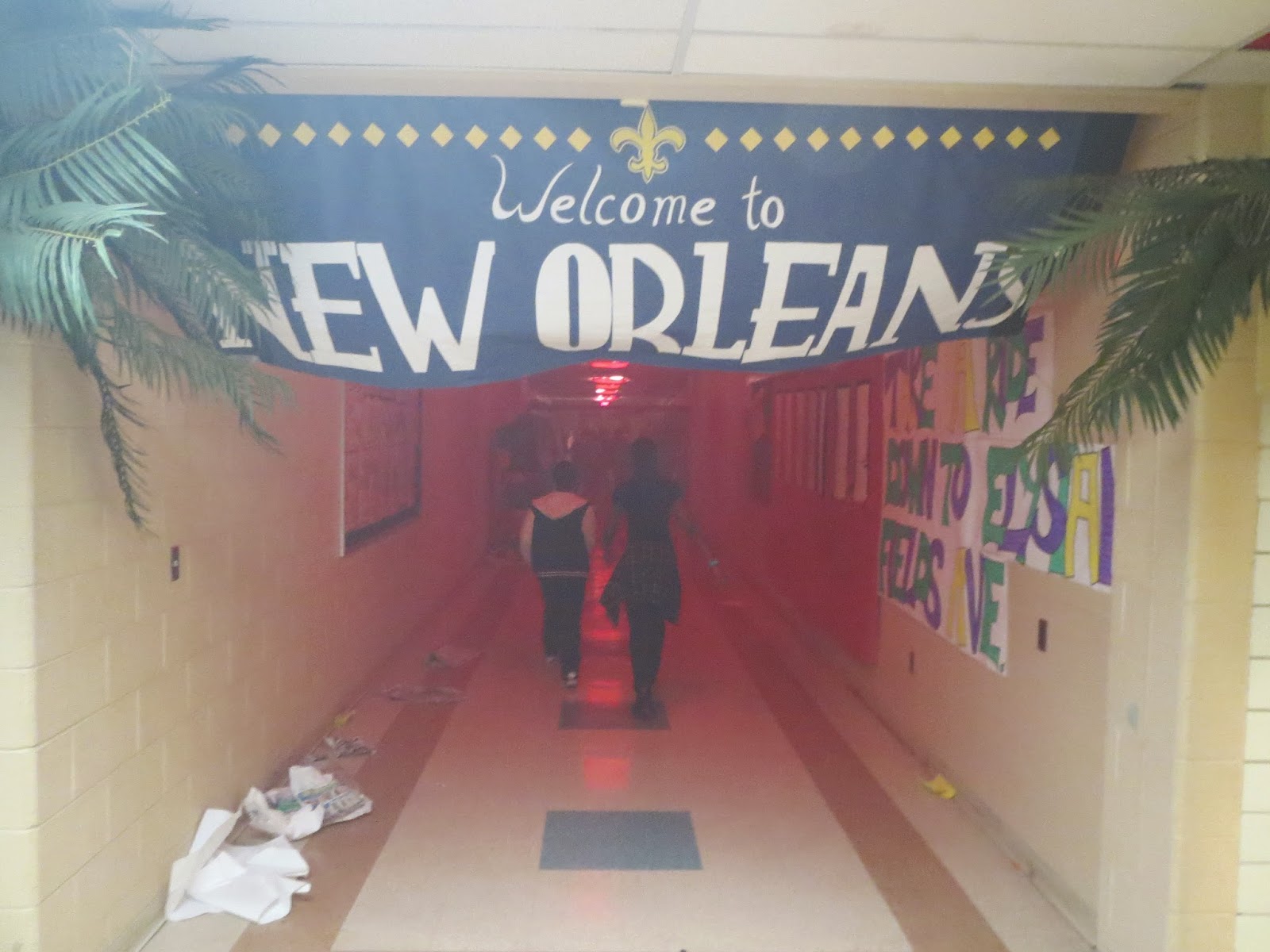
For our school's annual Festival of Nations Open House, the Linguistics students helped out by creating signs explaining "The Language of New Orleans" for our English Department interpretation of Tennessee Williams' A Streetcar Named Desire.


 There are more photos from the event itself at Festival of Nations 2014.

Wednesday, January 8, 2014

Language Acquisition Observation Assignment

                                                        Language Acquisition Observation
Linguistics                                                                                                   
Your assignment is to observe a child who is between the ages of birth and four years old.  The ideal age of a child to observe is between the ages of two and three because most children ages two to three are in the midst of the “language explosion” period.

You can choose to interact with the child and film your experience to reflect on later or you can observe a parent/friend/teacher/sibling interacting with the child and takes notes on what you observe.  Pay attention to the phonemes the child is able to produce and the ones the child is not able to produce yet.  What sounds does the child make for the phonemes they cannot yet pronounce?  (My son, for example, at age two made the [t] sound in place of the [k] sound—choosing a voiceless alveolar consonant instead of the voiceless velar sound that he could not yet pronounce.)  Record as many examples as you can of sounds, words, phrases, and sentences the child says.
Your assignment is to turn your notes into a narrative of your experience.   Describe the context of your observation with the child (Where were you?  How do you know the child?  What was the child doing while you observed/interacted with him/her?).  In paragraph form, explain the observations you made about the sounds, words, phrases, and/or sentences that the child said.  Your essay should be 2-4 pages, typed, double-spaced, in MLA format.

Rubric:
_____/ 5- At least one full page of notes from your observation

_____/ 5- Essay explains the context of your observation in detail
_____/ 15- Essay explains the observations you made about the child’s language acquisition (phonemes, words, phrases, sentences)

_____/ 3- Grammar/Mechanics of the essay
_____/ 2- Essay is at least 2-4 pages, typed, double-spaced, in MLA format

Total Score: _____/ 30 points

**On the due date, you will be asked to tell the class about your experience in a two minute oral presentation.


Tuesday, January 7, 2014

Because...


 What do you think of the American Dialect Society's choice of "because" as the Word of the Year?

Because awesome?  Because lame?
 
American Dialect Society Chooses "Because" as Word of the Year

Full Circle Moment

I met Janney, one of the Original High School Linguists from the MSL Class of 2011 and a student at Hamline University in St. Paul, at the Linguistic Society of America conference this past weekend in Minneapolis.  We went to sessions on Names and Literature, Names and Women, Forensic Linguistics, and Endangered Languages.  We took a selfie at the conference in honor of the Oxford Dictionary's Word of the Year.


Sunday, December 29, 2013


Take this dialect quiz!
"How Y'all, Youse, and You Guys Talk"
Based on research by Bert Vaux and Scott Golder and published in the New York Times on December 21, 2013

Sunday, December 1, 2013

Guest Speaker on Ojibwe

On November 20th, Dr. Meg Noodin, UWM professor of Ojibwe, came to talk to us about the Ojibwe language and people. One of the most fascinating things she talked about was how verb-centric the language is (she said about 80% of the language is verbs) and when you think about a language with so much focus on verbs, you think about how the emphasis on action, movement, motion affects how people perceive the world, as opposed to a language with a lot of emphasis on nouns, or things. I also was interested to learn that for the Ojibwe, the Great Lakes are conceptualized as more of a sea and that they have a different word for a smaller inland type of lake. We also learned that the name Chicago comes from an Ojibwe word for "skunk," and Wauwatosa was originally the Ojibwe "Waawaatese" meaning "firefly," Mequon was "Miigwan" meaning "feather," and Kenosha was "Genozhe" meaning "pike fish."

Sunday, June 30, 2013

Final Exam Essay Example


Thank you to Marina for allowing me to share her final exam essay on this blog.  The final exam essay prompt in Linguistics is very open-ended, essentially what have you learned in this class.   The first time I assigned such a broad question I was nervous about what kind of response I would get, but students have impressed me with their insights. 

Marina J.
Linguistics
Ms. Loosen
1 June 2013
In Linguistics
            It is rare in high school walk away from a class knowing what you have learned will stick with you and be applicable in the real world.  The knowledge I gained in linguistics extended beyond the classroom.  With the school year drawing to a close, I plan to seek other means of studying parts of linguistics, but just in this year I learned about the history of the English language, the acquisition of language, how body language is used, and sociolinguistics.  I also learned that I'm a bit of a descriptivist.  This class is proof that students can learn a lot from stepping back and analyzing what makes someone alive; their ability to understand and use language.     
            In the average English class, a student does not find the history of the language.  Linguists map out English as a branch of the Germanic language.  Developed in Britain, Germanic tribes brought with them what is now considered to be Old English.  Circa the 13th century, Britain was conquered by the Normans who spoke a sort of French.  This added many French words into the English language, such as bouquet and clique. Then, circa the 15th-16th century, began what is known as the Great Vowel Shift.  We saw that the long vowels shifted upwards.  Listening around, we know that language does not change much overnight but the English language is expanding and evolving constantly.  Here we are with what is called Late Modern English.  As young, creative thinkers, we were excited to learn, or more so, realize, that we have all the power to change the language we speak.  Seeing slang, throughout history, transitioning into common language was interesting because students are so often told that their language is "wrong".  I have learned that kids these days are not destroying the language.  It is simply evolving.  Linguistics taught me to appreciate English in its complexity and insanity.  
            This year I was fascinated by how a person acquires language.  A child listening to and learning language while still in the womb is almost frightening but it is truly amazing how children pick up on grammar and universal grammar.  A person's knowledge of language grows as fast as they do.  I could see this with Ben.  The first time in class, he spoke in broken sentences and mixed up letters.  Then in his second visit, I could hear him speaking with more confidence and responding in comprehensible sentences.  I learned and have seen outside of the class that young kids do either, over apply grammar rules, or don't use them at all.  The Wug test showed this.  I will likely never forget what a Wug looks like.  I now know the basics of language that maybe teachers should have been teaching to elementary school student.  Knowing a morpheme is a meaningful unit of a word that cannot be further divided, may have helped me on spelling tests.  Knowing that a phoneme is a distinct unit of sound may have helped as well.  Linguistics has made me wish I was bilingual, in the native-speaker sense but MSL has been a wonderful environment for building the bridges of language.  At this age, my classmates and I have little time to waste if we really wish to fully understand the mental structure of our foreign languages.
            Sociolinguistics was my favorite part of the year because the material was easiest to observe outside of the class.  I had realized it before, that I code-switch but I had not known before what it was called.  I have begun paying more attention to my dialect shifts.  However, I do not agree with what we learned on genderlects.  In my own environment, women and men speak far too familiar for them to claim different dialects.  Each person, rather, has their own way of communicating with their own dialect.  Learning to recognize the differences in the body language of men vs. women, was interesting though.  I agree, women are more personal in a conversation and men pose to face the room.  Walking with power makes a person appear to have authority and speaking sharply and confidently gives a person power as well.  I may take a class in college that further explores body language or sociolinguistics as a broader subject.  I have taken the time to read articles by Noam Chomsky and I wish I had more time in the day to study what he proposes.          
            A great class offers students more than lists of  facts, notes, and names.  Linguistics offers new perspectives on the way people work together in a society and gives a person an understanding of how and why people think differently from one another.  One of my favorite new words that I can remember off the top of my head is "aware".  In Japanese, "aware" is the word used for the bittersweet decline of something beautiful experienced in a brief moment.  I experienced a moment to use "aware" this week when I picked the last branch of lilacs from my yard and watched them wilt on my nightstand.  I am driven to learn new words and ways to express thoughts and feelings.  I have learned to appreciate all languages and recognize that no language is, or ever was, primitive.  I am increasingly aware of my language in all of its forms and the languages used around me by classmates compared to friends compared to people in other communities.  Linguistics opened up a new kind of learning, one which takes place in everyday life.  I have learned to love a high school class.